View of April, facing the garden

Spring hath sprung, and continues to spring along at rates I cannot hope to keep pace with, but that’s part of the fun, and I try anyway.

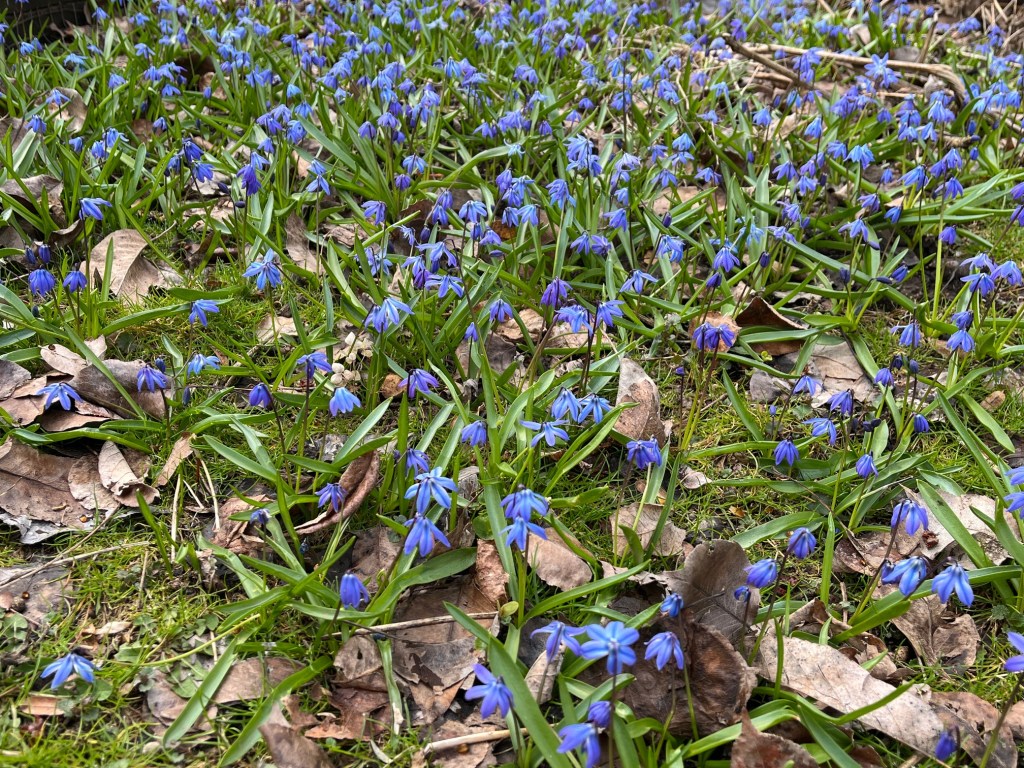
The first flower up and blooming in the yard was, as per usual, Siberian Squill (Scilla siberica).  She is beautiful, but she is also fecund, inedible to native wildlife, and persistent.  She is my garden nemesis.  

Pretty, but seriously, fuck this plant.

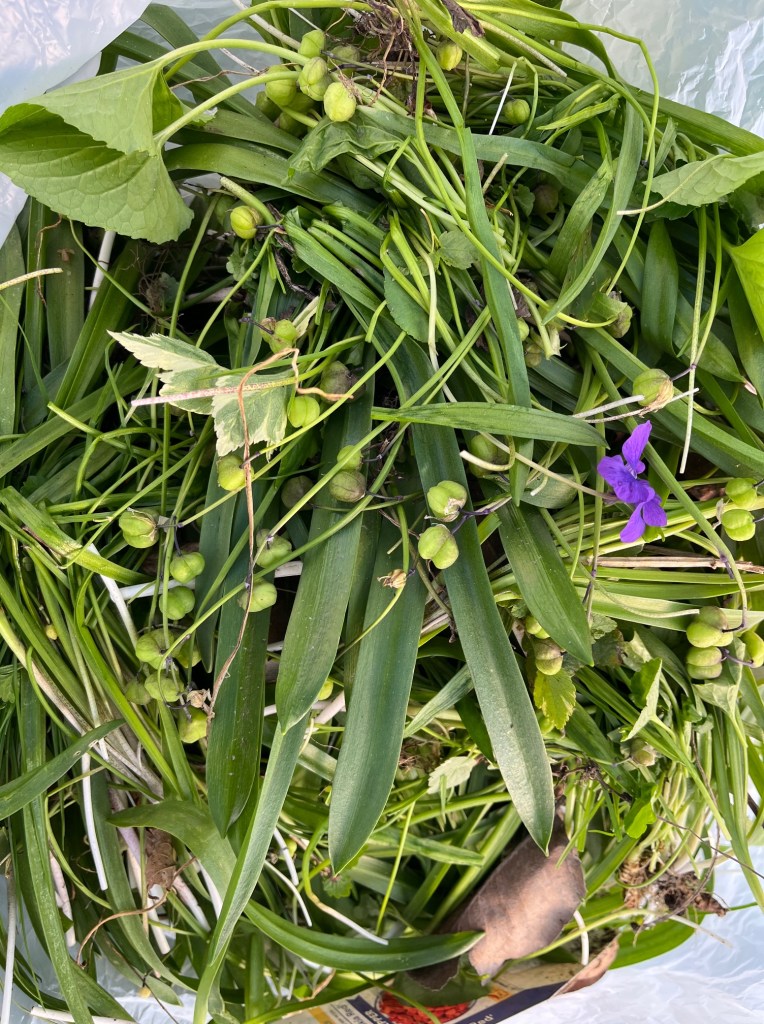
This year, starting in late March, I have pulled up three full plastic grocery bags worth of squill, doing my best to get the bulbs.  I barely made a dent in them.  They’ve likely been here decades longer than me, so it’s going to be a years-long uphill battle, but they’re simply too invasive and aggressive for me to tolerate them in the numbers they’re in.  I am researching early blooming native alternatives, because squill at least does the courtesy of having very early and cold-tolerant blooms, which help provide for insect pollinators as they wake up, but it’ll be a long time before I make enough of a dent in them to necessitate functional replacements.

At this stage in the season I’ve abandoned the notion of trying to pull bulbs, and am instead focusing on just pulling up the plant (so it can’t keep feeding the bulb) and getting the seed pods (because each of those puppies have like a hundred seeds in them, and the germination rates are insane). Don’t worry about the violet caught in the friendly fire, we’ve got a bazillion of them.

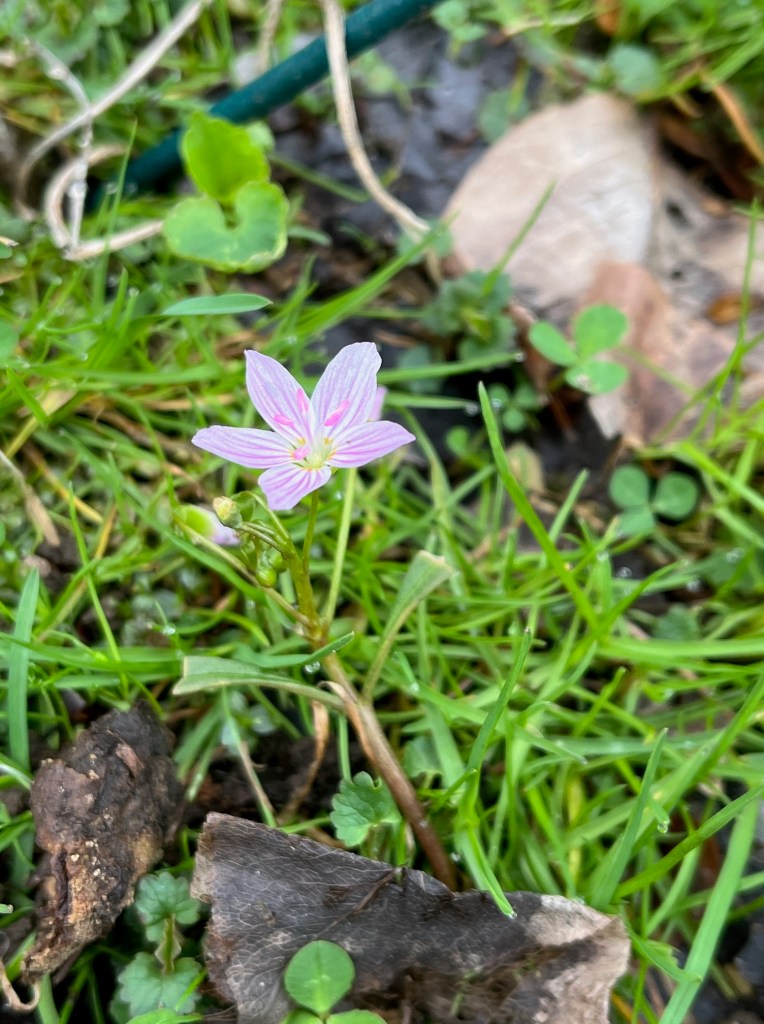
Counterbalancing the unexpected and unwelcome squill, is the unexpected and very welcome Spring Beauty (Claytonia virginiana).  I picked up some seeds for this woodland spring ephemeral about four years ago, and spread them in an area under our pear trees.  They then did not make any appearances until confusingly, last year, one of them popped up in the far side of the yard, and then this year, two popped up closer to the pear trees, but in the middle of a grassy area.  I know the seeds for spring beauty are distributed by ants, so….maybe they are showing up where they have because ant reasons?  Regardless, I’m delighted they decided to join the party, and have marked their location so they don’t get mowed (er, again) until they’re done blooming.  

Spring beauty lives up to its name, despite having been mowed over early in the season, before we realized it was there.

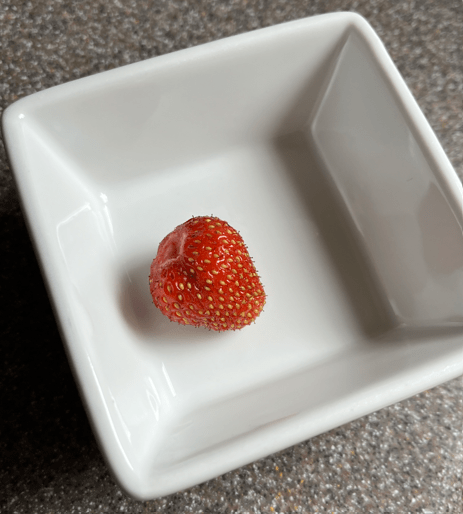
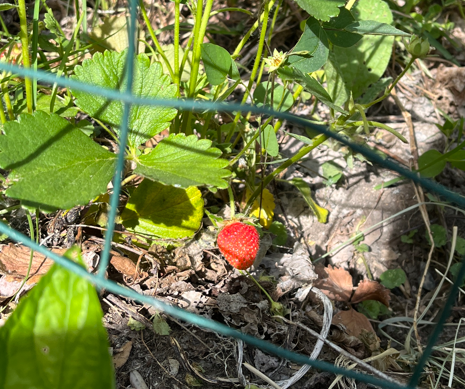
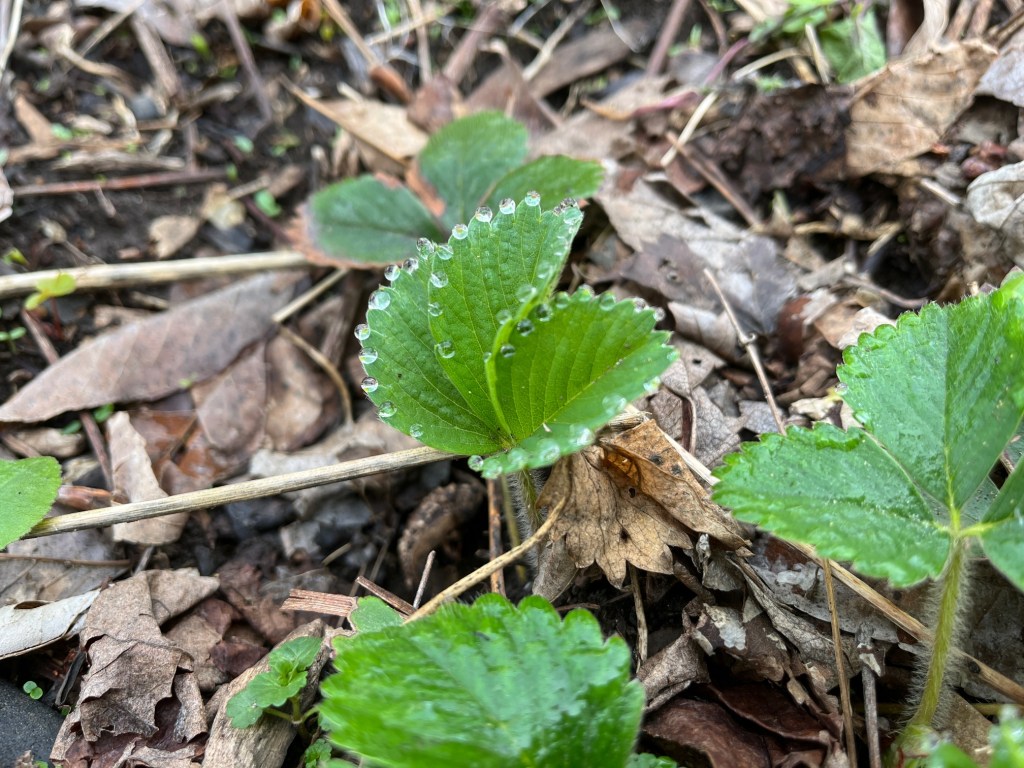
Speaking of early risers, it looks like all of the strawberry plants I put in last year – all 18 or so, literally rescued from a dumpster – seem to have survived.  I’m hoping that by letting them run wild all around the garden, there will eventually be enough strawberries produced that the strawberry-eating wildlife misses a few, so that I can actually eat one.   I’m not optimistic about this, but worst case scenario, at least someone gets fed, and they’re low maintenance.

The droplets on these strawberry leaves are the result of guttation; in wet conditions, water can enter the roots due to relative solute levels and cause pressure to propagate through the xylem, resulting in liquid being pushed out at the leaf edges.

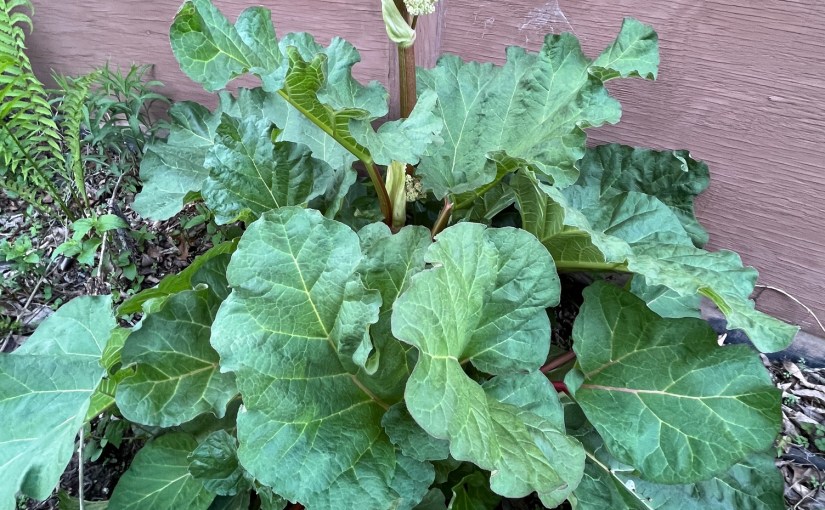
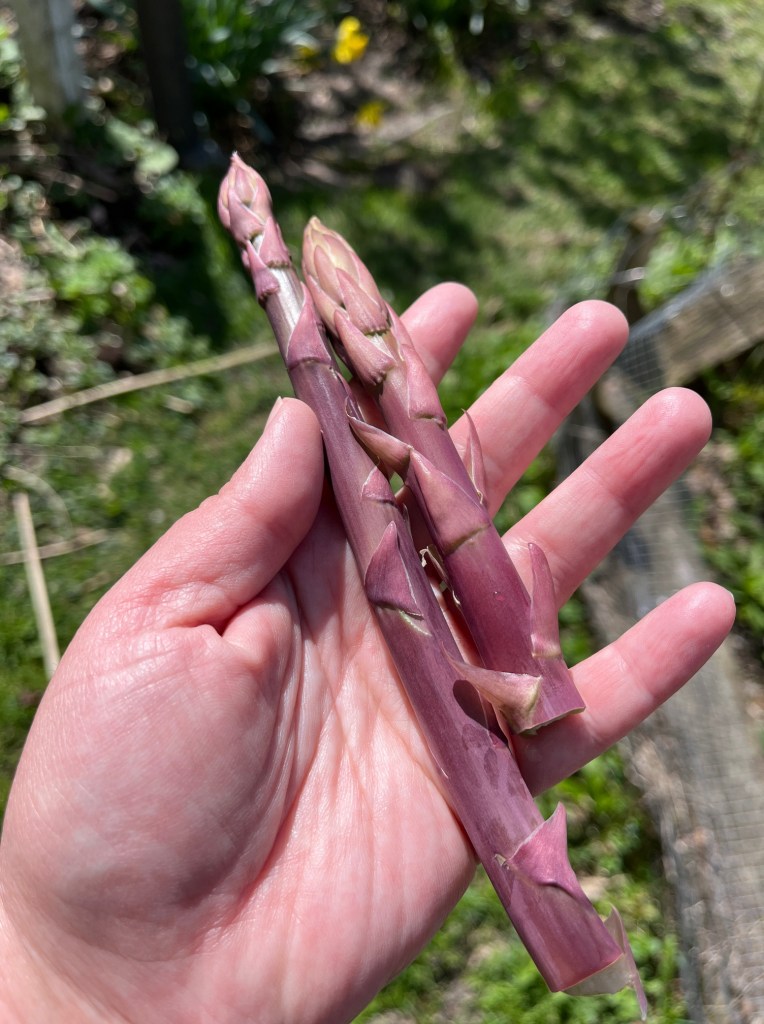
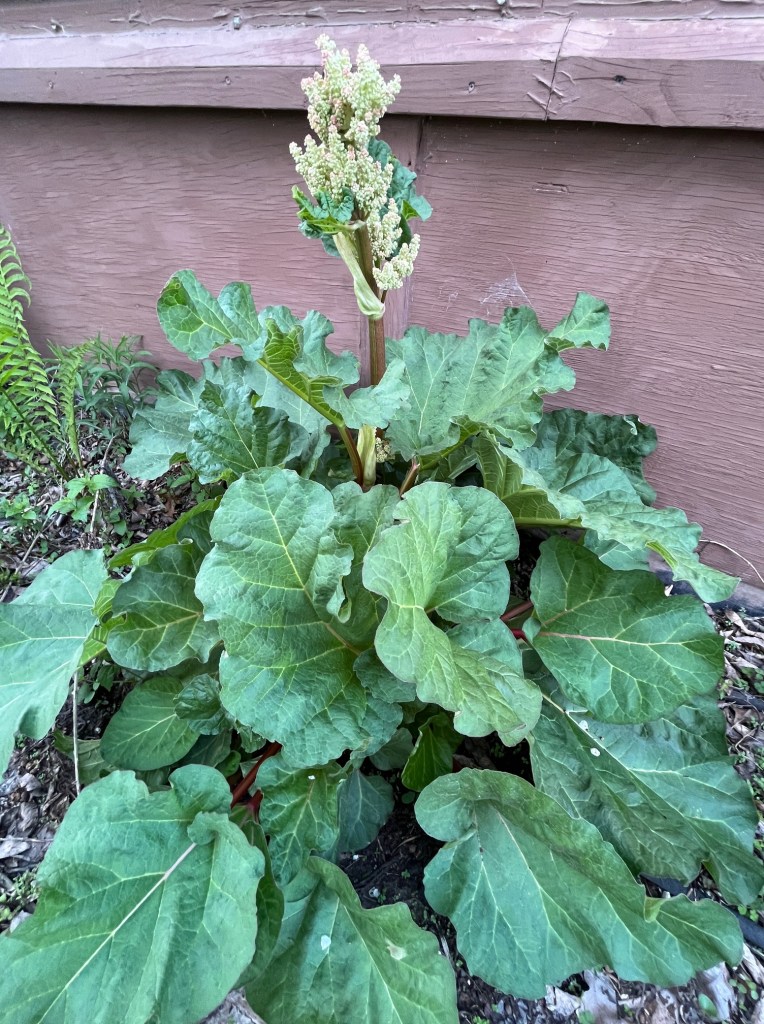
The asparagus yielded our first garden snack of the season; we planted the first crowns four years ago, but asparagus is slow to get established, and this is the first year they’ve been robust enough for me to be comfortable harvesting from them. I did find my first batch of asparagus beetles of the season today, so I’ll have to try to spend some quality time doin’ a bug murder.  Also on the perennial edible vegetable front, the rhubarb has both leafed out, and decided to flower this year, for the first time since we moved in.  I had not realized previously what a slow and dramatic diva the rhubarb flower is; it’s been unexpectedly interesting to watch it grow and unfurl.

Noms!
Category is vernal goddess realness, slay queen!

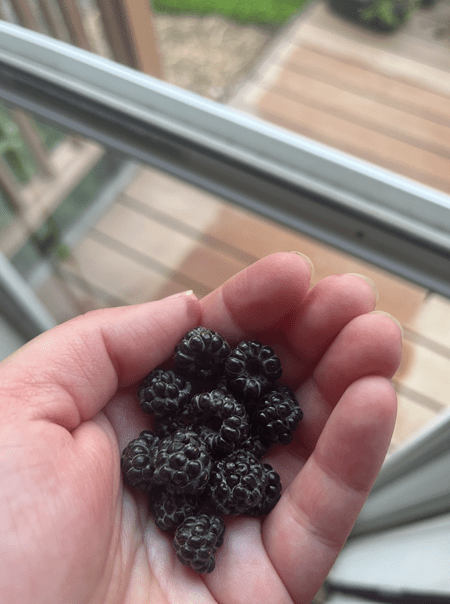
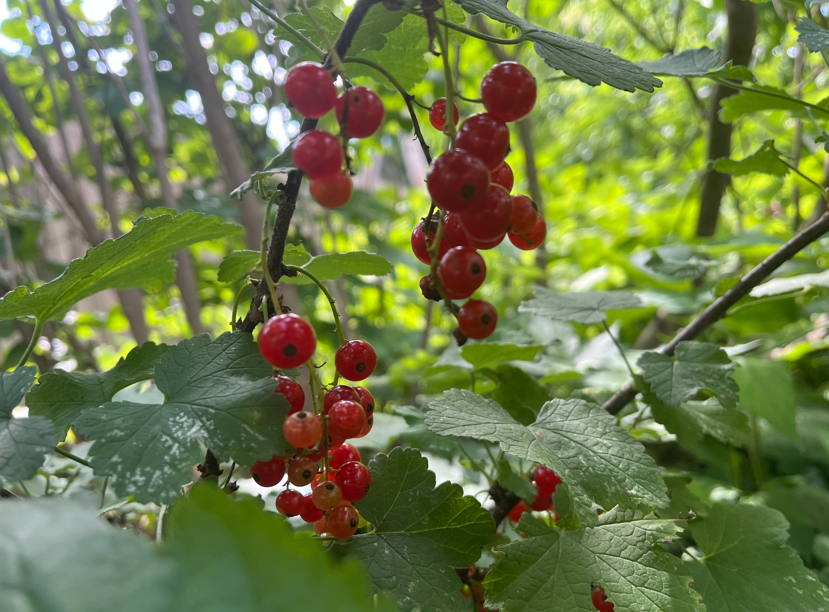
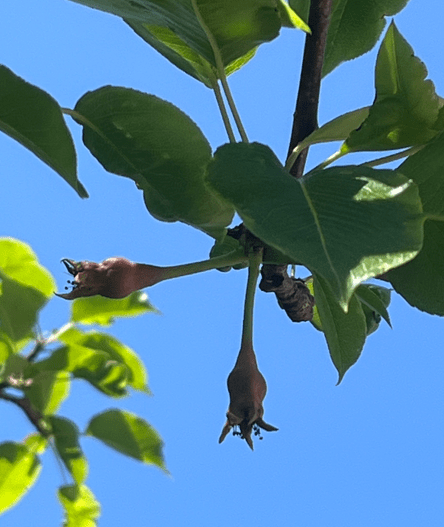
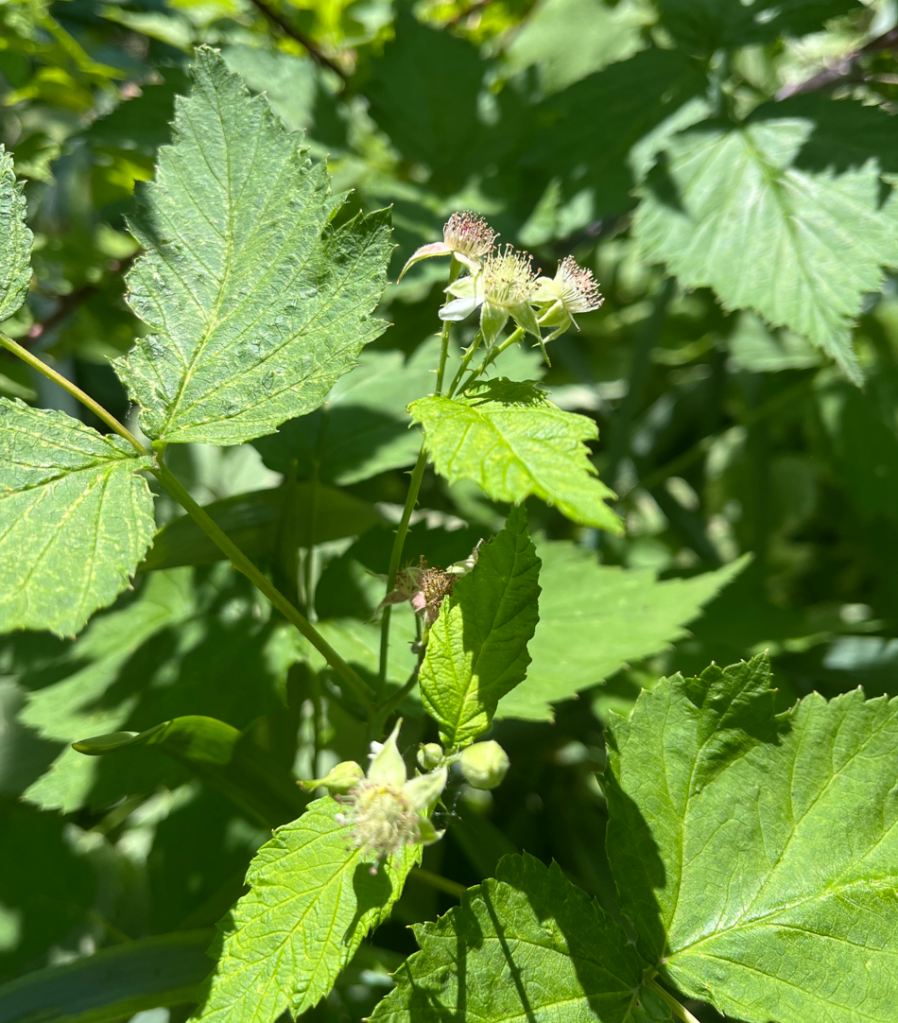
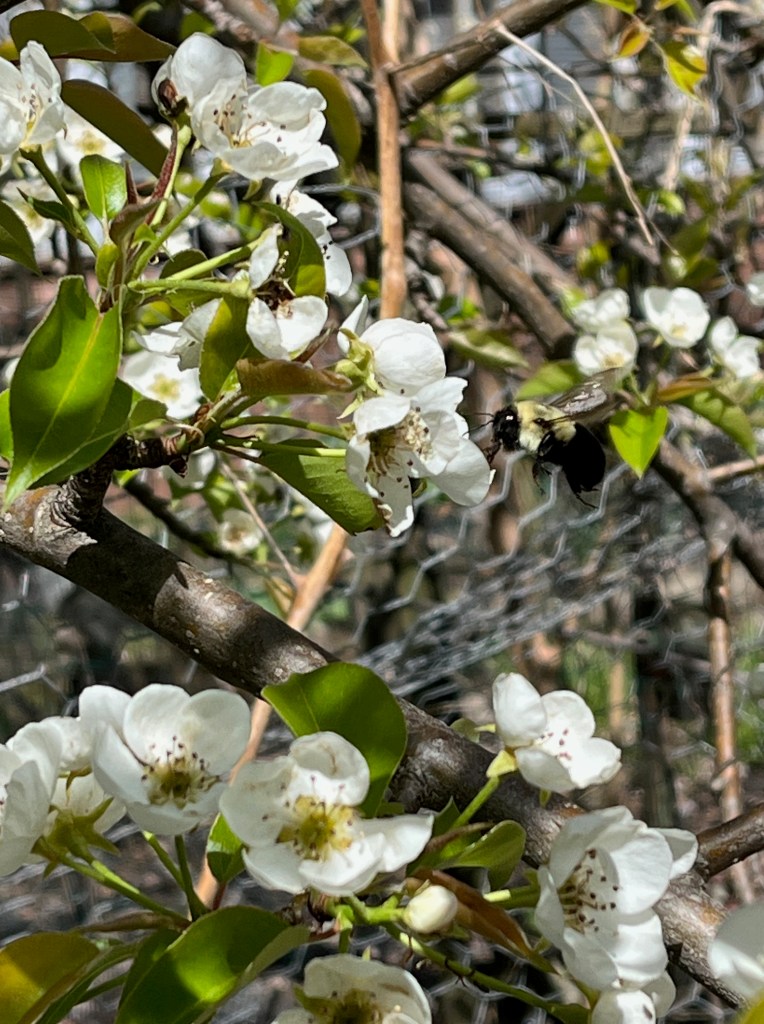
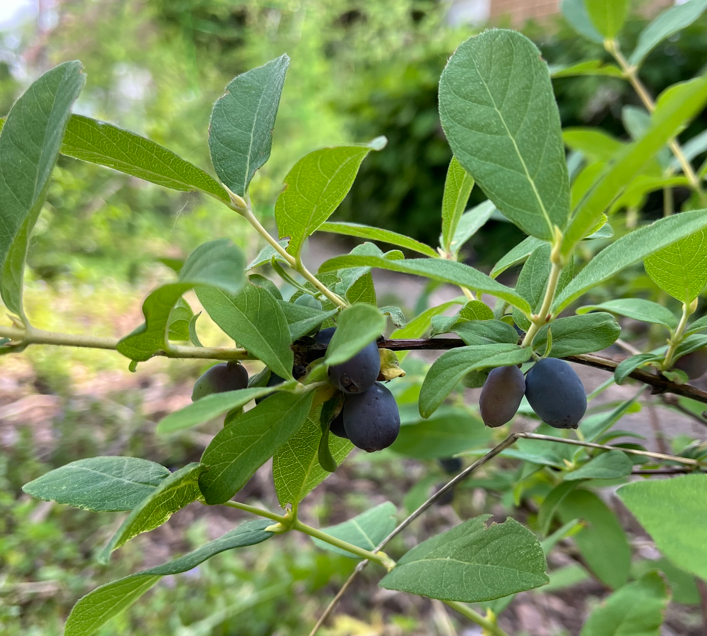
The plums flowered, followed shortly thereafter by the pears, the honeyberries, and the crabapple.  The black and red raspberries have all leafed out and are doing well, although they’re nowhere near flowering yet. 

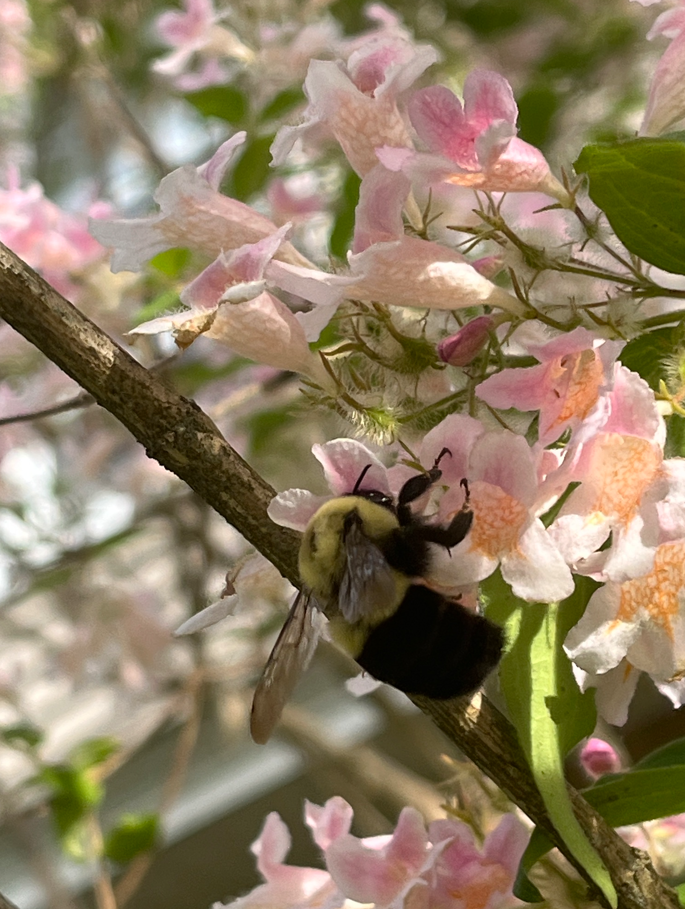
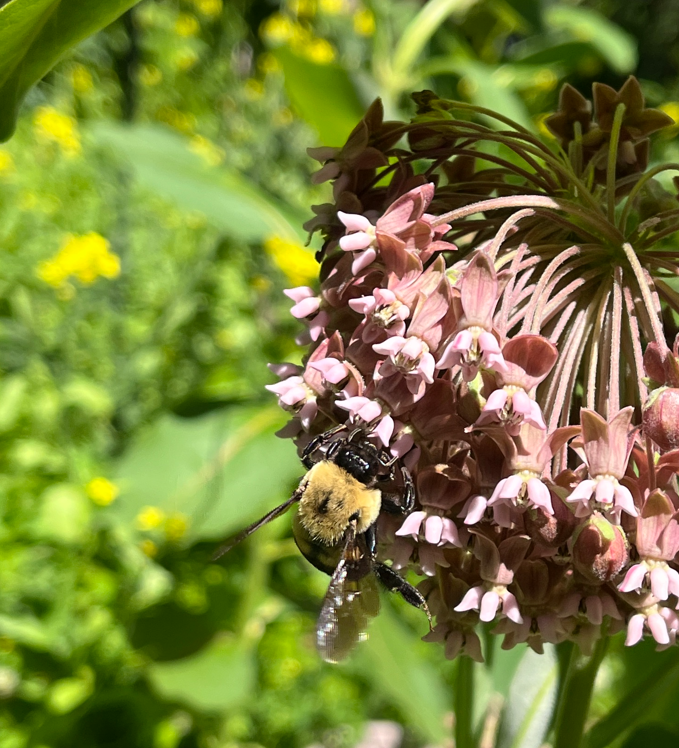
The audible range of buzzing sounds around the pear tree, from a dozen or more different species of bees, is one of my favorite parts of early spring.

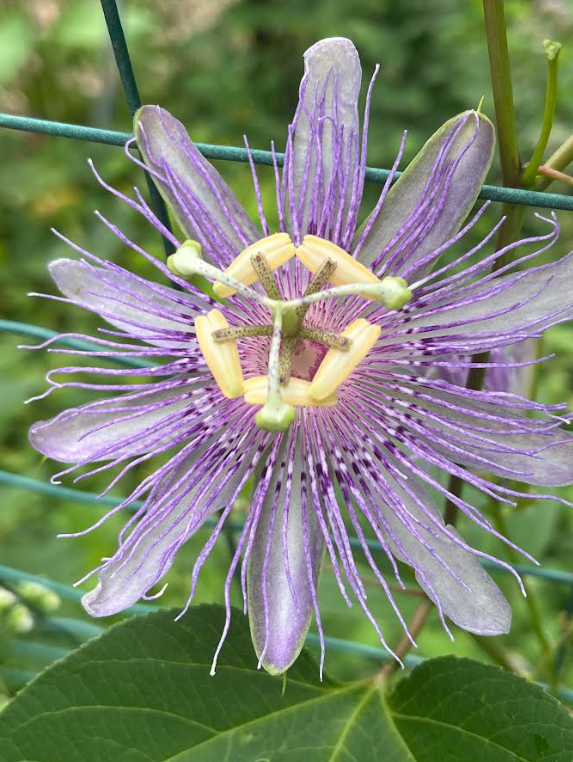
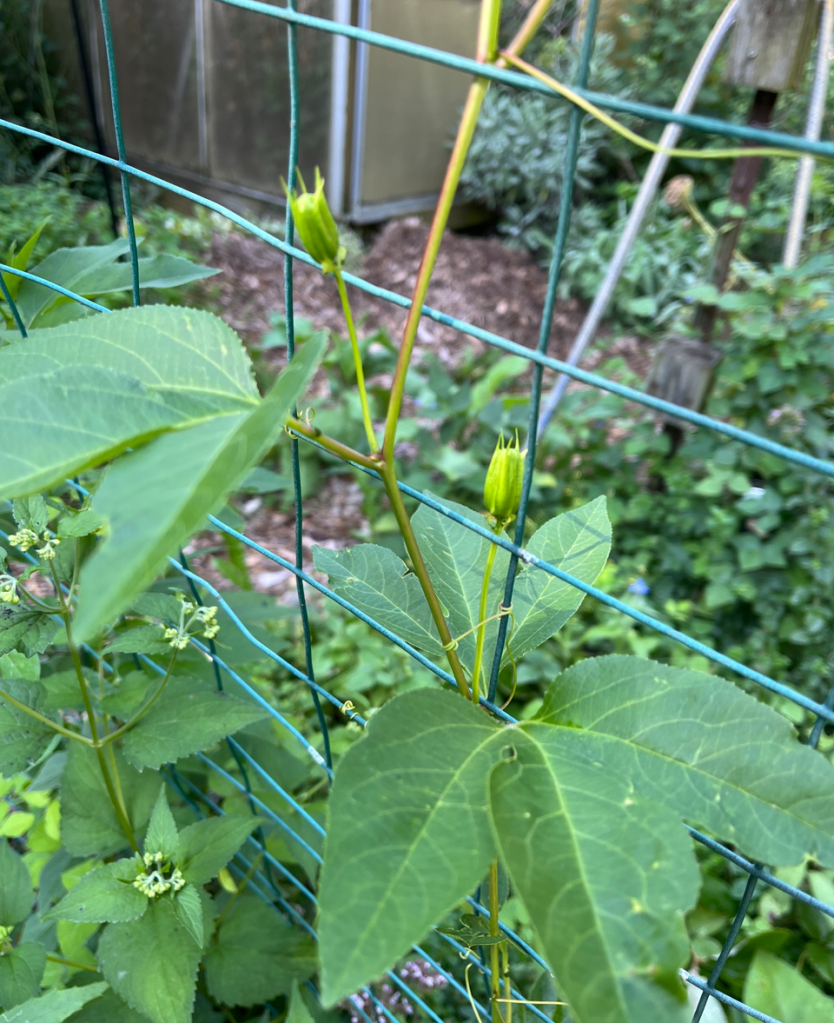
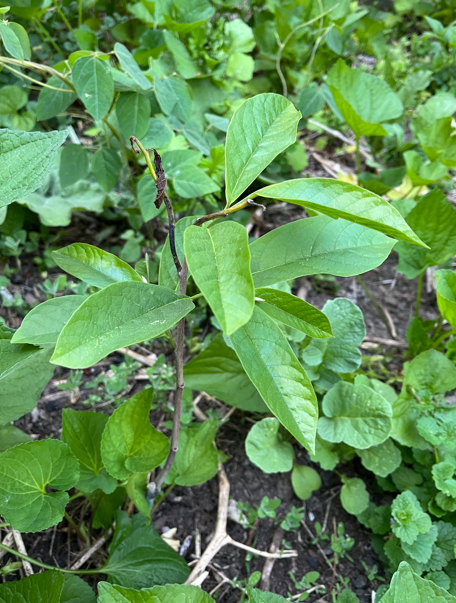
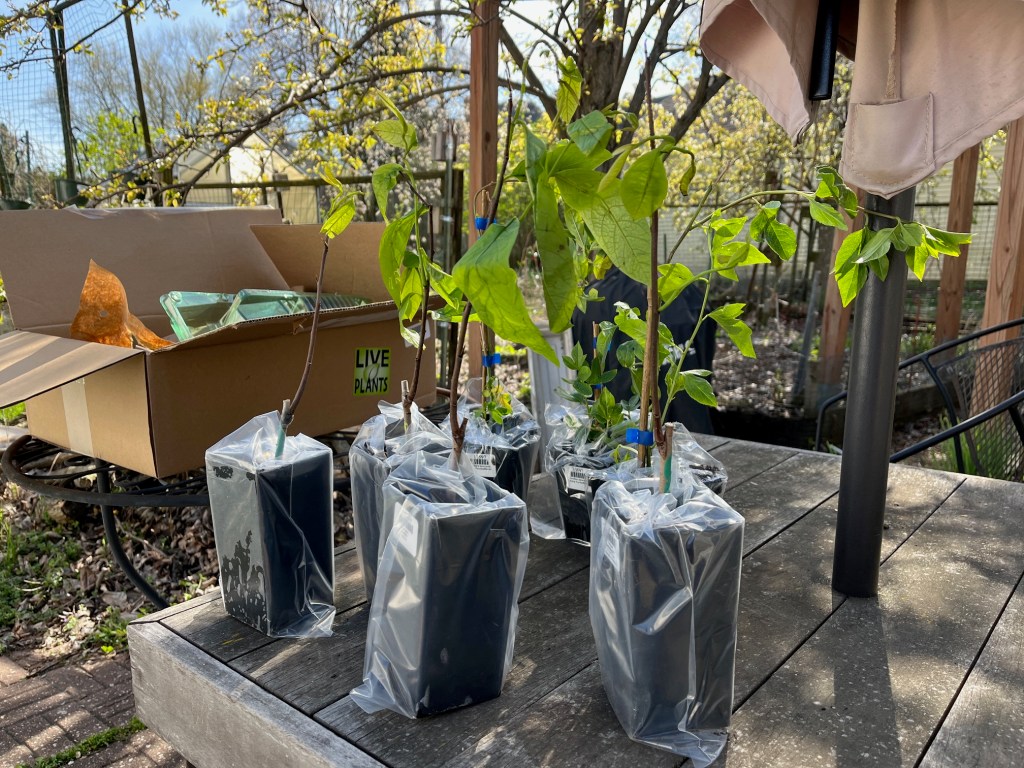
We also added to the mini-orchard; I purchased four pawpaw trees and three maypop vines, and was graciously gifted a number of year-old American hazelnut seedlings by a friend.  After being transplanted to their new homes, the hazelnuts seem unbothered, but the pawpaws and maypops are struggling.  I’ll reserve judgement until they’ve had more of a chance to settle in, though.  

Stressed about my new pawpaw and passionflower babies, but I tend to be a harsh mistress in the garden; I try not to waste a ton of time and energy to make certain plants happy, because I assume if it’s not working, it’s just not a great fit. If these guys fail, I’ll be sad, but I’ll rip ’em out and replace them with serviceberries or something and move on.

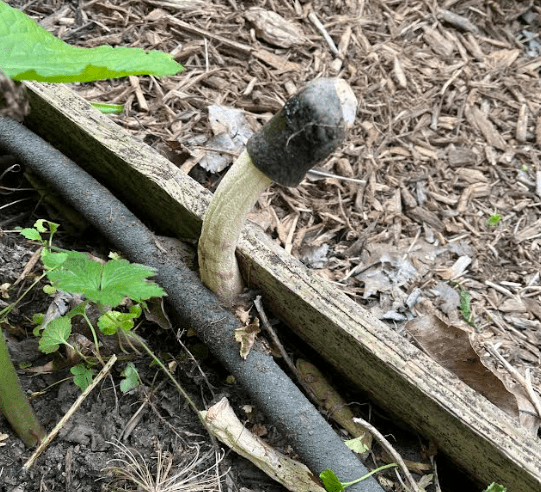
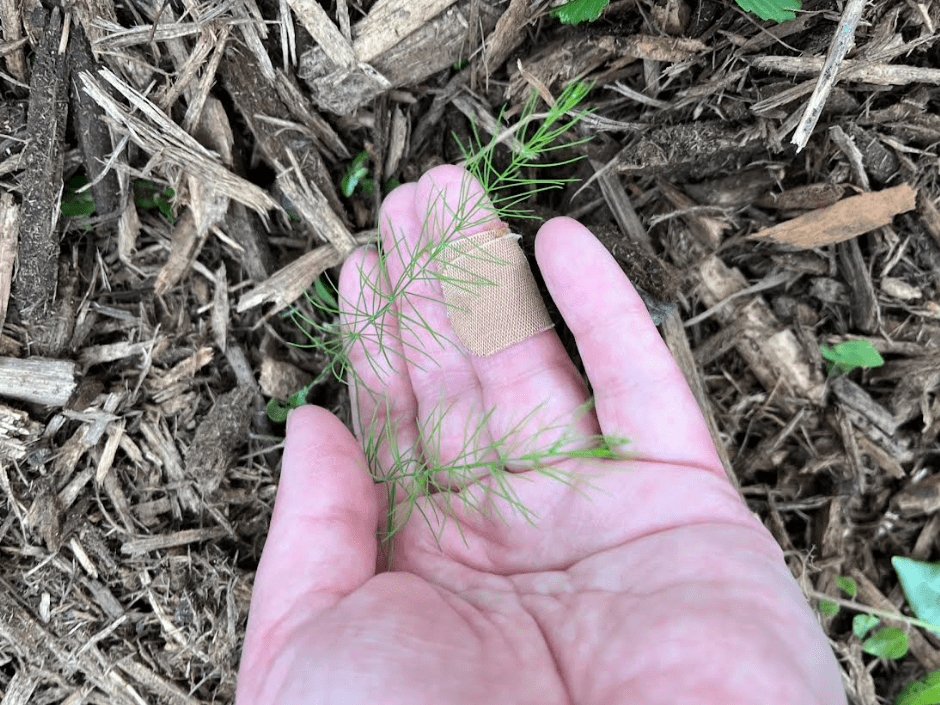
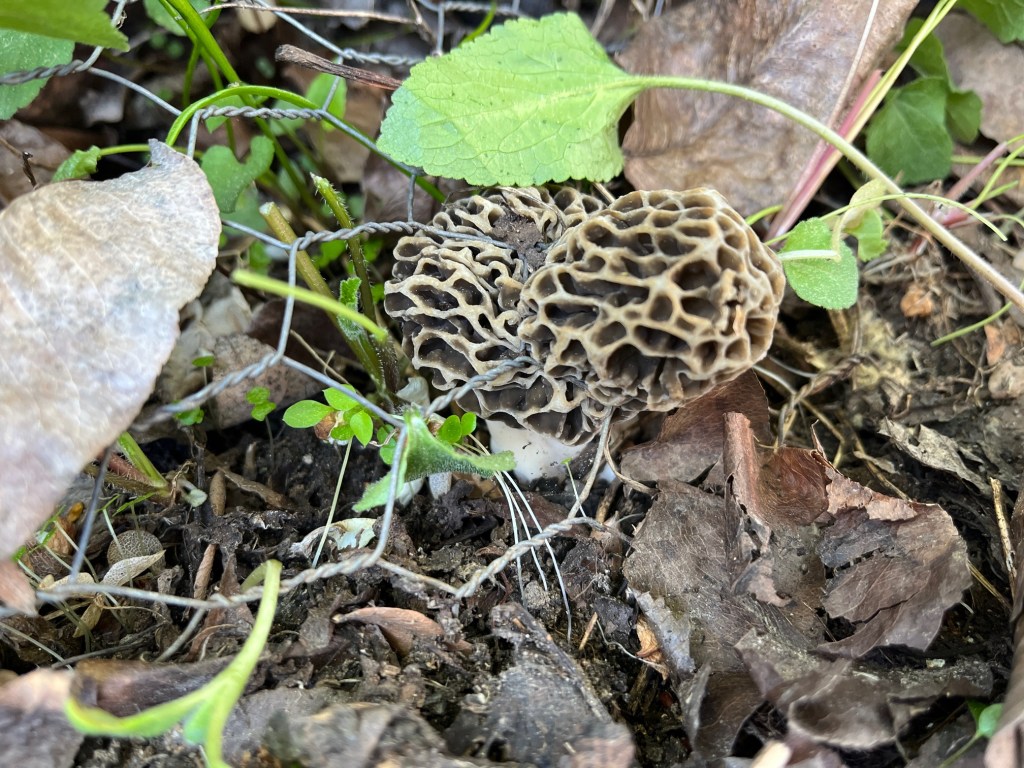
I’m pleased with the progress I’ve made in adding native woodland plants, both edible and non-edible (at least, for humans).  Last year I was able to get some wild ginger from a coworker who was thinning their well-established colony; they apparently wintered quite well and have sprung back.  The nodding onion patch is three years old now and continues to widen, and miraculously, the three ramps that popped up last year – after I spread seeds around two years prior – have returned, and are looking good.  I was also able to get some bloodroot today from a friend whose neighbor was thinning their colony.  As I was clearing some weedy plants from a spot under one of the pears to make room for the bloodroot, I uncovered quite a stately looking morel.  I’ve found a couple half-free morels in the yard before – unfortunately not in time to catch them in an edible state – but I think this one is a white morel (Morchella esculenta), one of the more choice species for consumption.  This one was also too old for eating, but not too old to be broken up and spread around the foot of the other fruit trees, in hopes of future fungal harvests.  

Awkward location, lil buddy!

Next task on the docket is to pot up the tomatoes I’ve started indoors, and to start hardening them off for transplant. Very excited to have so many new plants to get to know this year, and to see our efforts over the last four years to establish natives plants and perennials paying off!

Sugaring, and Springing Forth in Earnest

I’m not quite sure how to do this, but, I want to acknowledge that there’s kind of a lot of terrifying shit going on. I recognize and acknowledge that even in such times, we all need to chop wood/carry water, and that there’s obviously nothing wrong in taking comfort in the domestic and the comfortable. It just feels extremely weird to be assembling a post on my anodyne, cottagecore hobbies at such a time, especially when I have about a dozen half-written posts burning a hole in my Google Drive relating to various aspects of the Big Stuff happening right now. Those thoughts deserve to be polished before I put them out Here, though, and at the same time I want to stick to my goal of posting at least once a month. And maybe hearing about my anodyne, cottagecore hobbies will be in any way comforting to someone. Anyway, here goes.

Maple sugaring went quite well! The weather, despite some turbulence (surprise, here’s a foot of snow overnight, in the middle of March, rapidly followed by 70 degree temps!) stayed cool enough to give us a nice long sugaring season before bud break – which I believe still hasn’t happened quite yet, but should any day. (Bud break is when dormant buds begin to wake up and you can see bits of green start of appear; when this happens – or maybe because of it? I am not sure on the flow of causation here – the tree alters the chemical composition of the sap to better meet the needs of growing, young leaves. The changes mean that the sap turns bitter and unpalatable, known by the strangely cute term “buddy sap”.) About a week ago I noticed when I sampled the latest batch of sap that it was noticeably less sweet than it had been earlier in the season, and the flow rate slowed down dramatically over the last few days, so we decided to call it for the year and pulled out the taps.

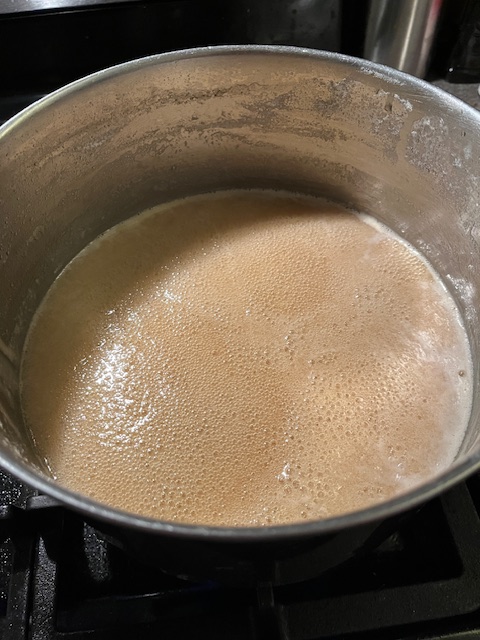
We finished off our very first batch of syrup almost a month ago now, quite on accident. When finishing off syrup – which just means the last stretch of boiling before hitting the right concentration of syrup – there’s a point just as you achieve syrup consistency where it suddenly starts foaming up very quickly, and if you are not paying quite close attention, can quite easily overflow even a relatively large container.

Mistakes were made, we weren’t paying enough attention and we lost maybe a quarter pint (it’s hard to gauge volume when it’s in a spreading pool on your stovetop). I was quite upset for about ten minutes, but I got over it, and we have chalked this up to being an Important Lesson and an Offering to the Kitchen Gods. We didn’t have any further unfortunate incidents, so clearly the sacrifice worked.

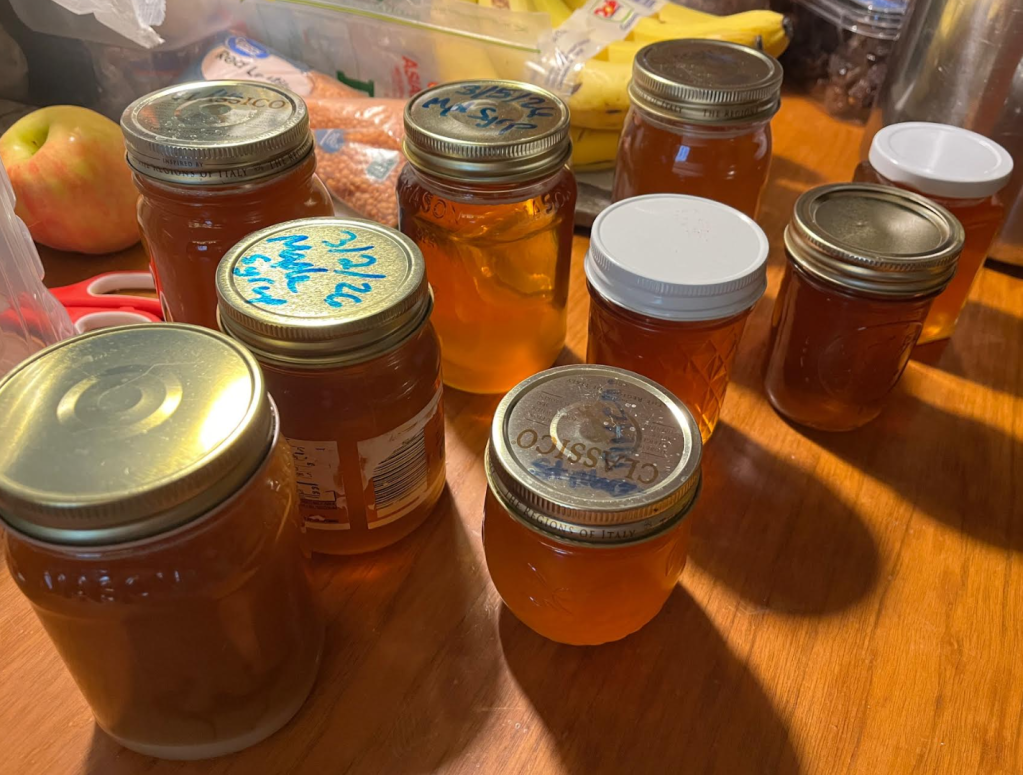
Minor setbacks aside, we ended the sugaring season with about nine pints in jars. We could have done water bath canning and made it all shelf-stable, but….meh, we have refrigerator space. If we get really motivated we could still reboil it and can it.

There were a couple more jars, but they’ve already been distributed to family.

You’ll note in the photo above that there’s a white sediment collecting at the bottom of the jars. This is what’s called niter, or maple sand. Rather infuriatingly, I’ve seen some homesteader influencer type videos where the creator confidently declared that this substance is crystalized sugar, which is absolute bullshit. Sap has plenty of other stuff in it besides sugar, even before bud break; the white precipitate is largely made up of calcium and magnesium. It’s edible and harmless, just not super aesthetically pleasing, so it’s filtered out of commercially produced and packaged syrup. It doesn’t bother us, though, and we are working with such small quantities that I think we’d lose a meaningful amount of our syrup if we filtered it, just due to amount retained/lost in the filter itself. I actually kind of weirdly like it; it has no flavor, and when you get down to the bottom of the jar, you just end up with sort of a very slightly grainy paste consistency that spreads very nicely on a toasted bagel.

We did learn a couple things during this sugaring season – mostly about what sorts of things work to weigh down the sap collection container in 70mpg wind gusts – but overall the process is….strangely doable? Weirdly manageable? It’s time consuming and there are certainly ways you can run into trouble – like my parents’ neighbors, who apparently boiled so much sap in their kitchen so quickly that the moisture did serious damage to their kitchen and they had to get all the drywall replaced – but those issues are avoidable with some common sense. I highly recommend it to anyone who has a bit of time, an appropriate tree, and any degree of sweet tooth. There is nothing quite as tasty as french toast served with your own homemade syrup.

Sugaring season’s end dovetailed nicely with our window for early spring garden prep. This week I’ve gotten some last minute pear tree trimming in and worked on cleaning out dead plants from some of the garden beds; tonight I set up my first tray of seedlings. Need to start another tray or two worth of seeds, see about getting some hazelnut shrubs ordered, and decide what my strategy is going to be for attacking the invasive Scilla this year.

As never-ending and frustrating as gardening can be, it’s comforting and distracting to have such a wide menu of tasks open to me. Things will slip, some things may just get away from me entirely (this is at least the third year I have wanted to get hazelnuts in), but that’s okay – there will always be more to do than I can handle, and still, somehow, the things I do get done will be enough to matter.

That’s probably a good lesson for me to carry with me out of the garden and into the rest of my life, particularly right now. I shall endeavor to do so.

Sugaring Season

This winter has sucked, for a variety of reasons – see previous blog post, for a big one – but even at the best of times, I struggle with this time of year.  The dark doesn’t retreat quickly enough; the cold and snow start giving way just to transition into cold, wet and muddy, all the usual stuff people struggle with.  On top of that, one of my greatest mental health (and probably physical health) stabilizers is just….contact with nature.  Doing my druidy foraging/gardening thing.  Touching plants, smelling the soil, caring for beings that in return care for me.  It’s not that there’s none of that during winter, but it’s very limited.  Having houseplants or a little hydroponic garden or something like that might help a little bit, but the cats just really, really like chewing on leaves, and I’m disinclined to burn effort struggling against their nature.  

All this to say, it’s maple sugaring season, and I’m psyched. 

We have one norway maple (Acer platanoides) in our yard.  It’s an invasive species in North America, but they were (and in many places, still are) abundantly used in landscaping because they’re resilient, salt-tolerant, and have nice, dense, shady canopies.  Ours is one of the last large shade trees along our street, and the trunk is nearly three feet in diameter: it’s a chonky boi, in the parlance of our times.  The chonkiness and location are why I haven’t had it ripped out; it’s technically an invasive species, yes, but this individual is likely not really hurting much in its urban location.  It’s also much larger than the village generally likes to see in a terrace, so its existence is sort of grandfathered in – I’m not sure it’d be explicitly against an ordinance to plug a burr oak or linden or something in as a replacement, but it’d probably piss someone off, and I’m not trying to antagonize anyone.  It’d probably be a bad idea as far as the integrity of our underground utilities, too; norway maple root networks stay pretty shallow, which I suspect is why it hasn’t caused any issues for us (yet).  

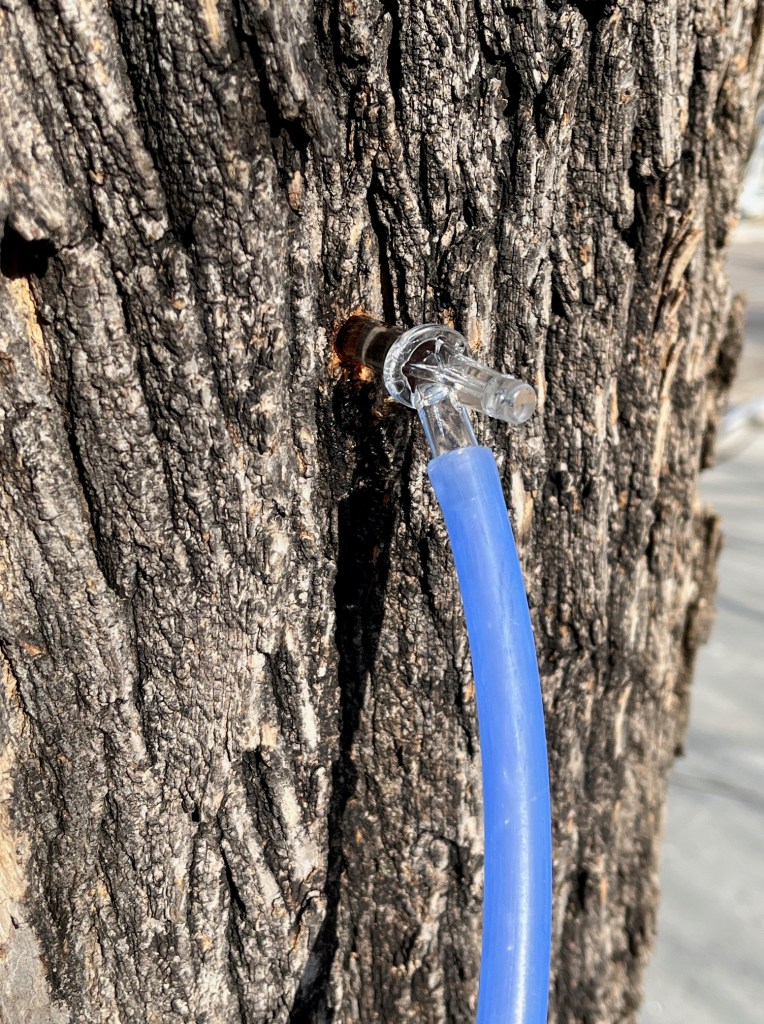
Rather than the traditional metal bucket and spile, we use the modern, jankier looking plastic spile, tubing, and gallon jug.

Norway maple isn’t considered a desirable species for maple sugaring – shockingly, sugar maples are better for it, what are the chances? – but you can tap pretty much any maple with a trunk at least a foot in diameter.  (Some of the resources I’ve seen specify you can safely use any native maple tree of that size, which seems like CYA phrasing to me, but I guess it’s possible that there’s some obscure maple out there that wouldn’t work.)  There’s a handful of other trees that you can tap for syrup as well – birch, black walnut, and basswood being some of the more common ones in my region – although it’s worth noting that some of them have much smaller concentrations of sugars in their sap than maples do, which means more sap and work is required for less finished product.  

Despite our tree not being of a sought-after variety for tapping, the syrup we’ve made from it….is kind of fantastic?  It’s a light amber color, very clear, and has an excellent (if perhaps a little mild) maple syrup flavor.  And considering that we only have one tree, the amount is surprising, at least to me; we easily generated enough for the two of us to keep our french toast drenched for the course of a year and to share a bit with family.  Of course, your mileage may vary, depending on how much french toast you eat.  I’m hoping to wind up with something like a gallon of finished syrup at the end of the season.  

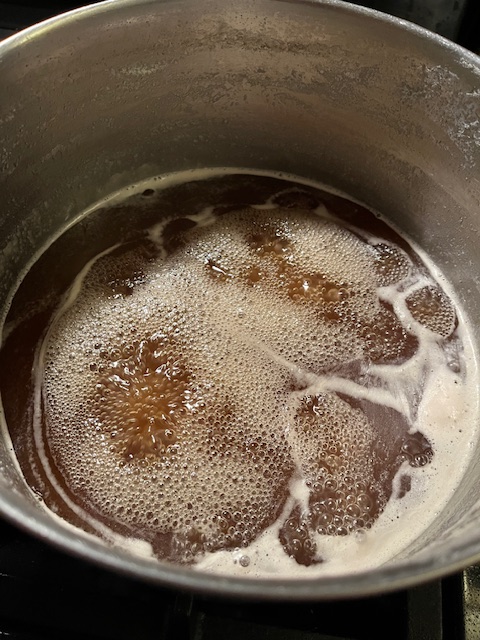
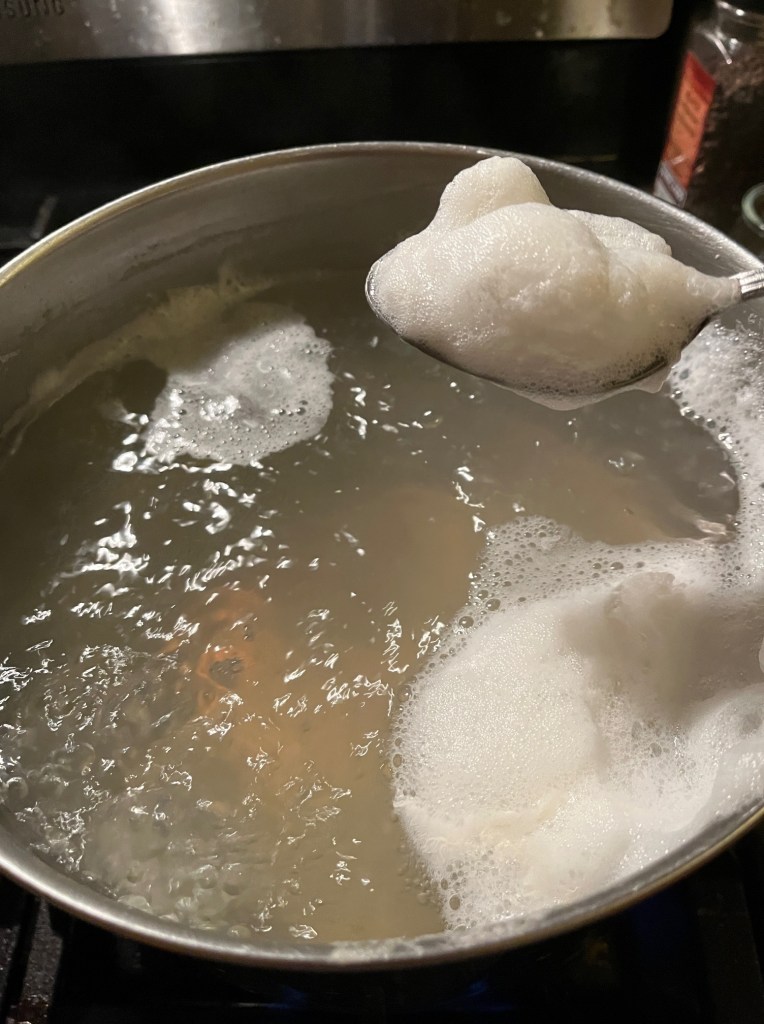
As sap is boiled, foam forms on top, and a pale precipitate drops to the bottom as a result of proteins and minerals present in the syrup. The foam is easily skimmed off; the precipitate, known as maple sand, isn’t harmful, and we usually don’t bother filtering for it.

Circling back to where we started – I’m excited because I really relish the process.  It’s the first interaction of the new year that I have with our yard’s chlorophyllic denizens.  It starts even before I’ve started my veggie garden seedlings for the year.  It forces me to pay attention to the weather, because sunny days mean more sap, and as a result I become more aware of the slow march of spring.  I usually end up going and checking in on the collection jug 2-4 times a day; it’s a short walk, but any enforced time outdoors is a good thing for me at this time of year.  A couple of times a week I boil the most recently collected sap about 75% of the way to syrup, as we have limited refrigerator space, the sap needs to be refrigerated to prevent it from spoiling, and I want to honor the gift and effort it represents.  It’s a lot of effort and attention but there is a simple joy participating in the process and observing the changes that happen along the way.  

Also, maple syrup is tasty.  

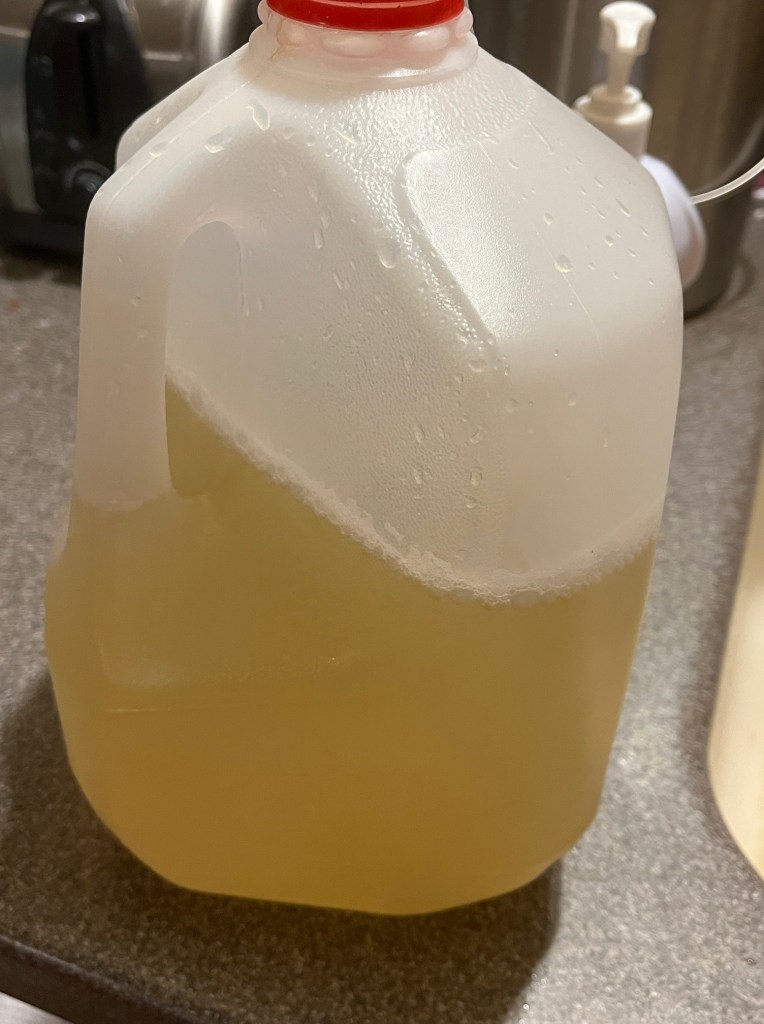
My ballpark estimate is that this is boiled like 75% of the way down, but it’s hard to gauge because I have utterly failed to take notes on yield volume this year (and every year prior).

I’ll report back at the end of the sugaring season on the results, assuming we don’t have some sort of syrup disaster in the meantime – and then it’ll be about time for me to make up my mind about what I want to start for the garden this year.  

Hello…world?

I’ve been sitting on this domain for a year, struggling to find inspiration, direction, hope, energy, but it feels like this week a dam has broken, and I need somewhere to talk about it.  So, here, it is: an website.  Ye olde blogge.  Like it’s 1998 again.  
The horrors of the last year are sprawling, incomprehensible, and bone-chilling.  They are straight up Lovecraftian in their scope when perceived from the vantage point of me, one who is but a tiny raccoon-gremlin posted up in their comfortable and to-date quite safe midwestern den.  I should not be surprised that I have personally been so unaffected.  I am white as fuck, like the inside of a (delicious) Costco croissant, and despite my queerness, in a straight-passing relationship, so I’m just not really a direct target at the moment.  However, I have spent much of my life believing that Bad Times Were Coming Even For Me and, one might say, prepping for that eventuality. To that end, I have spent probably too many hours trying to understand the Bad Times, what it’s like to live in them as a regular person, and what one can do to mitigate as much of the bad as they can, both personally and generally.

Anyway, all that to say, I want to be clear that I see how bad things have been, how many people have been fighting the good fight, and at the same time, acknowledge that I have been safe, warm, unthreatened with immediate physical harm, and relatively immune from the short term effects of what’s been happening.  

I also want to say that I have felt like I haven’t done enough.  I won’t dissect what I haven’t and haven’t done because I don’t think that’s a good use of our time, but I will say that what is happening right now in Minnesota – and maybe more importantly, what is happening as a result of what’s happening right now in Minnesota – is spurring me into greater action.  I still wish I could do more, I probably should be doing more, but I pretty much always feel that way about every aspect of my life, which suggests that that’s a me problem, and I will do my best not to waste your time with it.  (I assume you’ve got your own problems for you to worry about.)  

What I want to do here, right now, is yell about the cracks that are forming in the remaining public support for our current fascist administration, and what that means about what we need to do next. 

You’ve seen those cracks, we all have, but something I want to reiterate – because I think it illustrates how important it is for us all to stretch to do juuuuust a little bit more – is how the groundswell of People Giving A Shit is distributed so very widely.  

I follow a lot of fibercraft subreddits, Facebook groups, etc.  A year ago I’d have categorized many of them as being deliberately nonpolitical (at least in the American party politics sense – everything is political, including crafts that are historically gendered).  As the last year has crept on more and more protest art has emerged as quilters, knitters, embroiderers, jewelry makers, and sewists of every stripe have used their craft to express their fears, anger, frustration, and hopes.  There has been a predictable backlash in some communities as the usual “but this isn’t for politics” whinging has started (often by people who have shockingly little objection to art dealing with other inherently political topics, like religion, so long as it reflects their own views/beliefs); it seems to me like the communities that have stayed strong and grown are the ones that have stated outright that politics is an unavoidable facet of our lives, and supported artists and crafters sharing their messages of protest in their chosen media.  It’s inspirational.  I love to see it.  And it’s becoming more and more common; a day after Alex Pretti was shot, there was embroidery of his last words being shared. (And it’s not just fibercraft groups I’m seeing, it’s widespread, like, even some of the cat subreddits are taking clear stands.)

That’s perhaps not all that surprising for a hobby that is historically gendered very female and still dominated by women, with a healthy and growing contingent of queer folks of all genders.  It was much more surprising to me when my partner – who is of the male persuasion and at least occasionally pays attention to sports – said that the football meme group he checks occasionally was plastered with political messages in support of the resistance in Minneapolis.  Living in a purple state, I am very aware that football is one of those subjects that’s relatively safe ground for blue and red to chat about.  A reddit full of dudes sharing football memes is generally going to be a “politically” (in the sense of, who did you vote for) neutral territory.  Those subreddits flipping over to messages making fun of ICE agents and supporting the protestors and observers reflects a change in what is considered a baseline, everyday shared understanding.  Something’s been decided in the court of popular opinion.

I know that the fight never ends, regardless of how many battles we win.  I know that it will never be enough, because the struggle is neverending.  But I also know that I have seen the landscape shift in ways I couldn’t even hope for a month ago.  There is momentum here, and that is wonderful, but it’s been paid for in blood over the last year (and every year before that), and this opportunity demands that we rise to meet it.  

I’m not speaking to the people on the front lines right now, either in MN or anywhere else people have been organizing and resisting – they know what they have to do, and what the stakes are.  They’ve been giving it their all.  I hope they’re taking breaks when they need to.  I’m speaking to those of us who are – due to geography, race, economics, whatever – on the sidelines, who have a choice in how much we want to engage with what’s happening right now.  

We are the ones whose support can make the biggest difference right now.  We are the ones who are best positioned to be able to add our strength at this time, when it’ll have the greatest effect.  I’m not saying everyone needs to get into their car and drive to MN right now, because that’s a terrible idea, but I’m asking that if you have the capacity, then turn the dial up one more notch on whatever you’ve been doing already. If you’ve been donating $25 monthly to the ACLU, can you make it $50? If you’ve been contacting your elected officials, can you make another few phone calls than usual, or make it to an in-person town hall? If you can’t walk out of work for the shutdown on 1/30, can you make sure you don’t make any purchases at least?

Not everyone will do so, not even everyone sympathetic to the cause, and that’s ok, because the fight will be ongoing, and we will need them to join in later, when we’re running low on resources.  I suspect the fight will come to the front door of more and more people who’ve otherwise been able to live comfortably in neutrality.  Once it’s there, those folks will have the choice to capitulate or to resist, and I have the feeling a lot of them will choose to resist.  

However, if you’re relatively comfortable, and would like to ensure that you are able to remain so in the future, I ask that you find a way to lend material support to the folks in MN.  Find a group to donate to.  Spread the word to your friends and family, let them know that you’re donating, suggest that if they want to make a difference, they can do so as well.  People who are facing the terrifying experience of having their neighborhoods occupied by poorly trained, trigger-happy federal agents need groceries and legal support.  The least we can do is help make sure they can be fed, you know? And regardless of whether you’re in a position to offer them material support, watch and study what the people of MN are doing. Understand that it requires face to face communication, trust, and community. If you want to be poised to fight the good fight when or if the place you live turns into the next battleground, get to know your neighbors, reinforce ties you already have, and make sure you have some idea of who you can trust.

Anyway.  That’s the message that finally crystallized sharply enough in my head that I had to commit it to blog form.  This isn’t going to always be what I talk about here, or at least I hope not, but in addition to being The Message I Think Is Important right now, it’s a good illustration of the type of stuff I think about and pay attention to, and thus what I’m likely to write about.  

Whoever you are, all ~3 of you who are likely to read this (hi Mom!), however you’re fighting, please do your best to take care of yourselves.  We’re all important, even if it doesn’t always feel like it.  The fascists want you to believe that we’re all isolated, powerless, and ineffective, but they want us to believe that because we’re in their way, because we are NOT powerless, we are legion, and together, we will make a difference. Don’t let the bastards get you down.

Resources: